
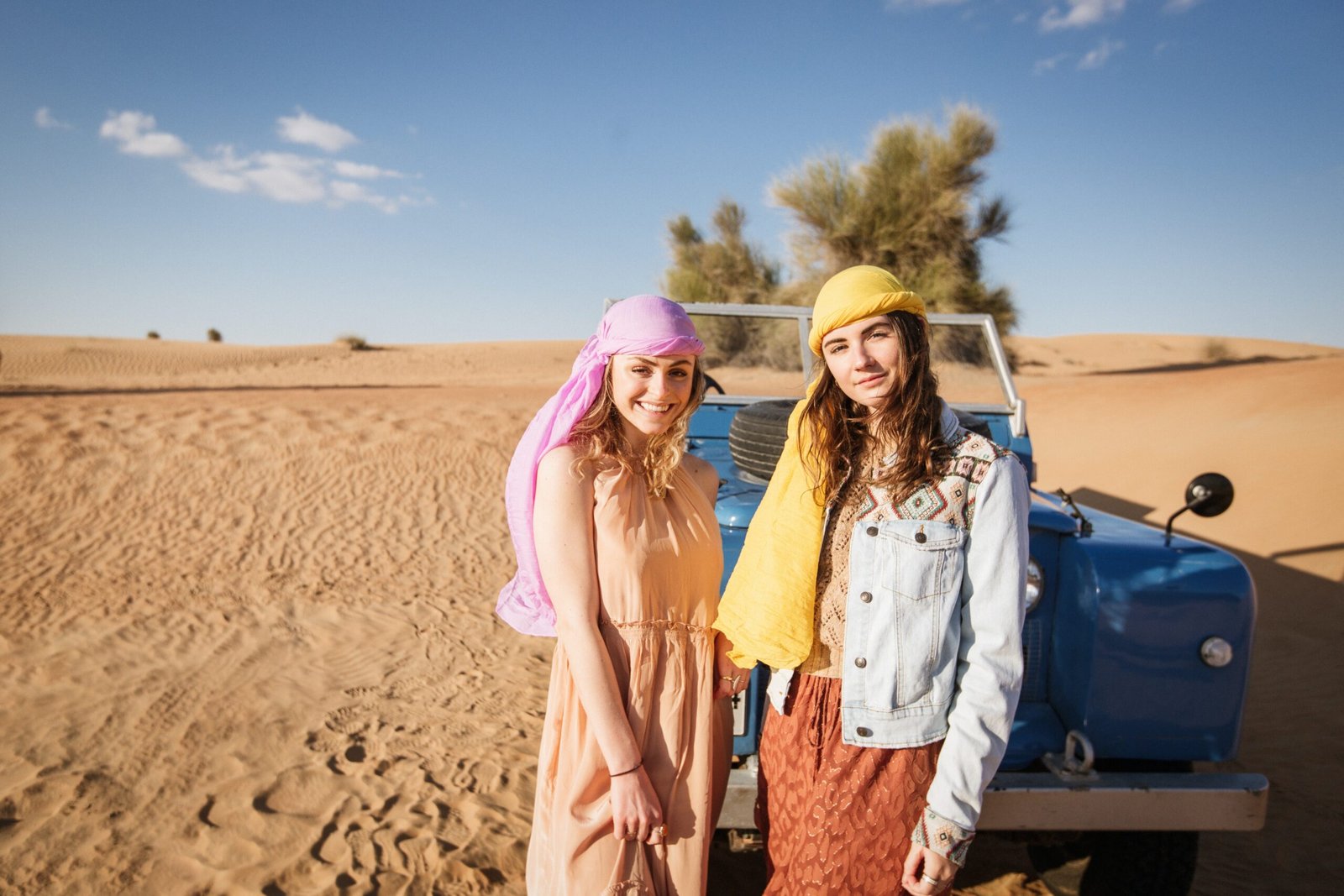
The desert can look effortless in photographs: sweeping dunes, a golden sunset, and a perfectly styled outfit against the sand. In reality, deciding what to wear desert safari guests should pack is about far more than looking polished. Dubai’s desert brings bright sun, moving sand, warm afternoons, cool evenings, and adventure activities that call for clothing with a little more thought behind it.
The right outfit lets you settle into every moment comfortably, from a luxury hotel pickup and dune drive to camel rides, sunset photos, dinner, and live entertainment. You do not need specialist expedition gear. You do need breathable fabrics, secure footwear, and one smart layer for after dark.
What to Wear on a Desert Safari: The Essentials
For most desert safaris, choose lightweight, loose-fitting clothing that covers enough skin to protect you from the sun without making you feel restricted. Natural or performance fabrics such as cotton, linen blends, rayon, and moisture-wicking materials work well. A relaxed shirt with trousers, a breathable jumpsuit, or a modest maxi dress can all feel appropriate for a premium desert experience.
Light colors are usually the most comfortable choice. White, cream, beige, soft blue, olive, and muted pastels reflect more sunlight than black or other very dark shades. They also photograph beautifully against warm orange dunes. That said, avoid wearing your most delicate all-white pieces if you plan to try sandboarding or ride a quad bike. Fine desert dust is part of the experience, and it does not always leave quietly.
Your outfit should allow you to sit comfortably in a 4×4, step onto soft sand, climb in and out of a vehicle, and move freely during photos or activities. Very tight jeans, short bodycon dresses, heavy formalwear, and clothes that need constant adjustment can take attention away from an otherwise unforgettable afternoon.
The best daytime outfit options
A breathable T-shirt or loose long-sleeve shirt with lightweight pants is an easy, reliable choice for men and women. Long sleeves are especially useful when the sun is strong, provided the fabric is light. Women who prefer dresses can choose a midi or maxi dress with a light layer underneath or over the shoulders. A jumpsuit is another elegant option, though it is worth considering the practical side before a long drive into the desert.
For families, dress children in soft, comfortable clothes they can move in easily. Long shorts or lightweight pants, a breathable top, and closed shoes are generally more practical than dressy outfits. Bring a spare layer for younger children, who can feel the evening temperature change more quickly.
Footwear Matters More Than Most Guests Expect
Sand changes the rules. It gets into open shoes, makes narrow heels sink, and can feel surprisingly hot in the afternoon. Closed-toe sneakers are the strongest all-around option for a desert safari. They provide grip, protect your feet, and work well for dune walks, camel riding, and optional adventure activities.
Flat sandals can work for guests whose itinerary is focused on a relaxed camp experience and photography rather than sandboarding, buggies, or longer walks. Choose a pair with secure straps, not loose slides. Avoid high heels, platform sandals, leather dress shoes, and new shoes that have not been broken in. They are uncomfortable on soft terrain and offer little practical value once you leave the pavement.
If you are joining a premium safari with a refined dinner setting, there is no need to sacrifice style. Clean, sleek sneakers, polished flat sandals, or comfortable loafers give you a smart finish without making the desert harder than it needs to be.
Dress for the Time of Year and Your Safari Schedule
What you wear depends on the season, the timing of your tour, and how much activity you want to include. Dubai’s desert is warm for much of the year, but the difference between a summer morning and a winter evening can be significant.
Summer desert safaris
From roughly May through September, prioritize sun protection and airflow. Wear loose, pale clothing, choose breathable fabrics, and avoid heavy denim or thick synthetic materials. A hat and sunglasses are not accessories in this weather – they are useful comfort items.
Morning safaris are often the most comfortable option during hotter months, particularly for guests interested in dune buggies, quad biking, or a more active itinerary. Even then, bring water, wear sunscreen before pickup, and choose clothing that dries quickly if you perspire.
Winter and evening desert safaris
Between November and March, afternoons are usually pleasant, while evenings can become cool once the sun drops. A light jacket, pashmina, overshirt, cardigan, or thin hoodie is a simple addition that makes a major difference during outdoor dining and entertainment.
You do not need a heavy coat, but you will appreciate a layer when sitting outside after dark. Guests often focus on the daytime forecast and underestimate how quickly the temperature can shift in the open desert.
What to Bring Beyond Your Outfit
A few well-chosen extras keep the experience comfortable without overpacking. Bring a small crossbody bag, belt bag, or secure day bag rather than a large handbag. You will want your phone, sunglasses, sunscreen, and a light layer within reach, especially during stops for photos.
These are the four items worth carrying on nearly every safari:
- Sunglasses with UV protection to reduce glare from the sand
- Sunscreen applied before departure and reapplied when needed
- A wide-brim hat or cap for daytime excursions
- A light jacket or wrap for sunset and evening programs
A scarf can also be useful, particularly on a windy day. It offers light protection around the neck and shoulders and adds a polished touch to photographs. It is optional, not essential, so do not feel you need to purchase traditional desert attire specifically for the trip.
For camera-ready guests, bring a phone strap or compact camera bag that closes securely. Dune driving can be exhilarating, and loose items can move around inside the vehicle. Protect valuables and leave expensive jewelry, oversized bags, and anything difficult to clean at your hotel.
What Not to Wear for a Desert Safari
The desert is a luxury setting, but it is still an active outdoor environment. Skip anything that leaves you overheated, unsteady, or worried about damage. Heavy jackets, thick jeans, stilettos, restrictive skirts, and long trailing garments tend to create more inconvenience than style.
Very short clothing can also be less comfortable when sitting on sand, riding a camel, or climbing in and out of a Land Cruiser. A more covered, relaxed silhouette feels appropriate across the day and gives you more freedom to enjoy the experience. If your safari includes quad biking or dune buggy driving, closed shoes, sunglasses, and clothes that cover your arms and legs are especially sensible.
Also consider the desert’s fine sand when choosing fabrics. Suede, velvet, silk, and pieces requiring dry cleaning are better saved for a city dinner. Select items you can shake out, brush off, and wear without concern.
How to Balance Style and Comfort for Premium Photos
Luxury desert travel does not require a costume. The most striking photographs tend to come from simple, well-fitting clothes in colors that complement the landscape. Cream linen, a flowing neutral dress, a tailored overshirt, or an earth-toned matching set can look elevated without competing with the dunes.
Coordinate with your partner or group if photos are a priority, but do not overmatch. Choose a shared color family such as neutrals, sand tones, soft greens, or warm rust shades. Avoid neon colors and busy logos, which can distract from the setting. Then build your outfit around comfort first, because the best photos happen when you are relaxed enough to enjoy the moment.
At Arabian Luxury Tours, a premium desert safari is designed to feel effortless from hotel pickup to your return. Wearing the right clothing helps you make the most of every included experience, whether you are enjoying a private dune drive, a camel caravan, sunset dining, or an evening beneath the desert sky.
Choose an outfit that lets you move, breathe, and stay present. The dunes provide the drama – your clothing should simply make the experience more comfortable, confident, and memorable.